
Kilimanjaro Trip Details
Whats included
Transfers from Kilimanjaro airport (to/from Hotel in Moshi)
2 nights of hotel accommodations in Moshi (1 night before and 1 night after the hike)
Transfer from hotel in Moshi to/from trailhead
Wake-up call with hot ginger tea or coffee served
Daily boiled mountain water in camp for washing in basin (note that there are no showers along the trail)
Private toilet tents for group
Sleeping tents (double occupancy)
Porter services: porters will carry your duffel bag (max weight of 15kg / 32 lbs per person) from one camp to the next camp
Guiding services (there will be a 1:1 guide per participant on the summit day)
Private cook: Fresh nutritious three hot meals per day cooked and served in LED lit dinner tent with table and chairs
Salaries for mountain guides, cook and porters
All Kilimanjaro National Park fees and permits
Continuing medical education programming
Group safety equipment
Daily health monitoring by expedition leadership
What’s NOT included
Additional hotel nights (if you wish to stay more than 1 day before and 1 day after the hike)AirfareTanzania entry visa (cost approximately $100)Meals and drinks while not on the mountain (at hotel)Gratuities for guides, porters, and support staff guides, chefs & porters* (approx. $500 suggested contribution/participant)Health requirements (Yellow Fever – compulsory if you have traveled before in a yellow fever infected country)Sleeping bag (though this can be rented)Snacks, personal medicineAirport transfers for independent arrival or departuresTravel and medical insurance (required)Rescue costs and extra expenses caused by abandoning the expedition
Physical REquirements
Each participant must:

Actively participate in program activities while contributing to a positive learning environment.

If taking prescription medications, must be able to self-administer at the prescribed dose and frequency without assistance (except in an emergency).

Adapt to local or regional expectations and services when traveling within and outside of the United States.

Perform all aspects of personal hygiene including dressing, washing, and toileting.

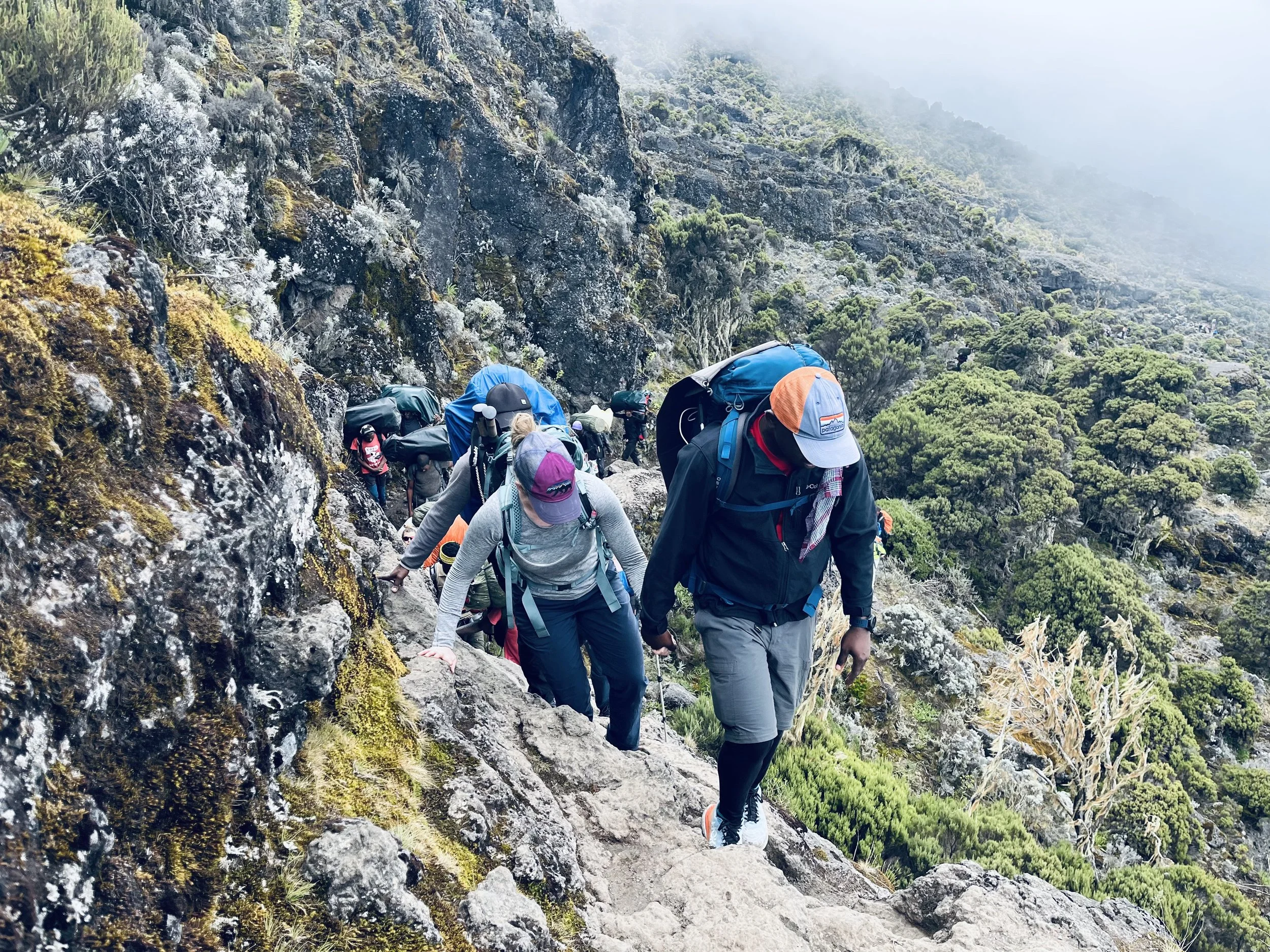
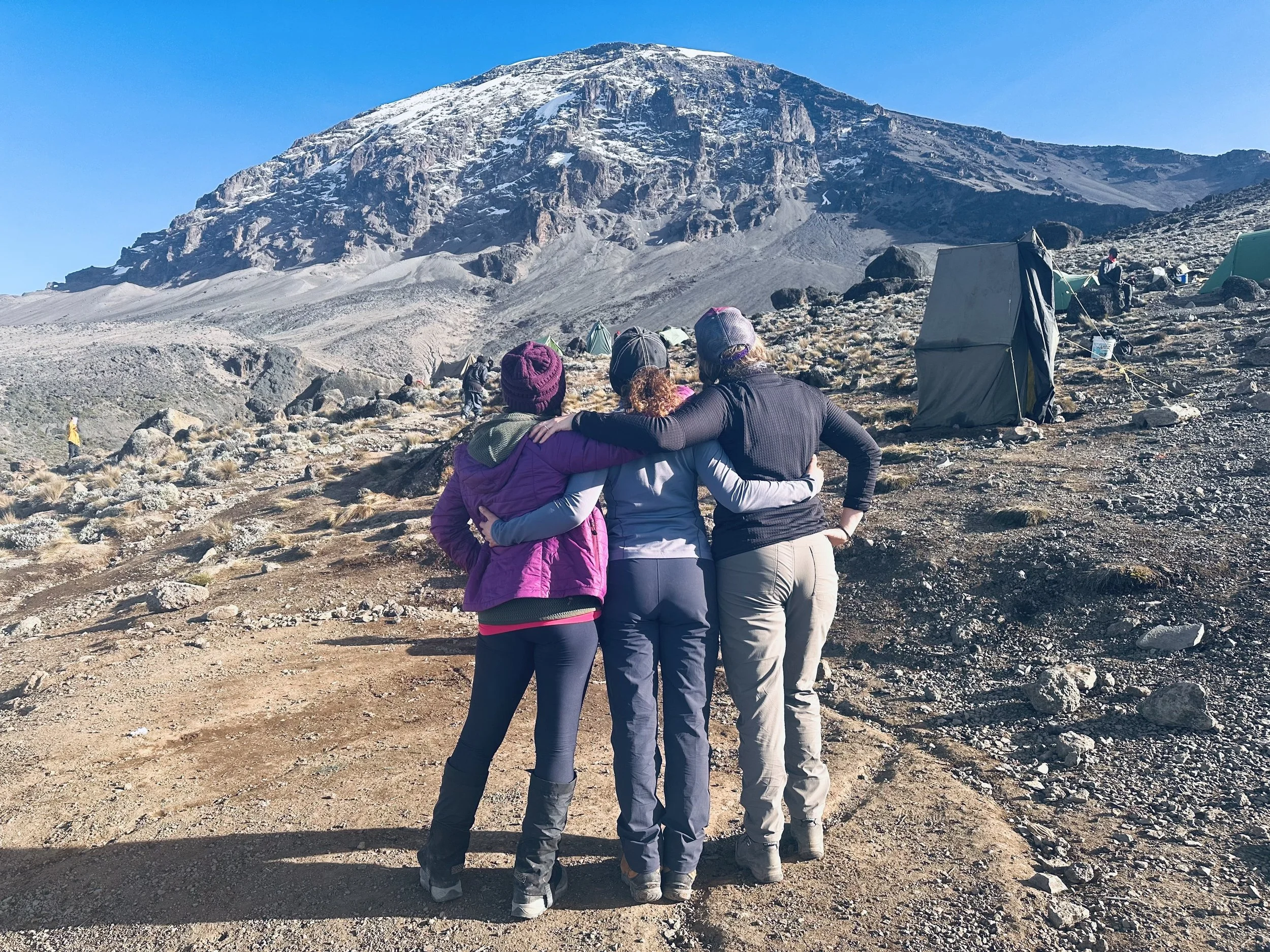
Live and sleep outdoors for up to 14 days at a time in a group setting. This may include a range of wilderness environments ranging from alpine desert to high altitude (up to 19,345 ft/5496 m), temperatures from 0F/-18C to 90F/32C, low and high humidity environments, open sun, rain, snow, and high winds.

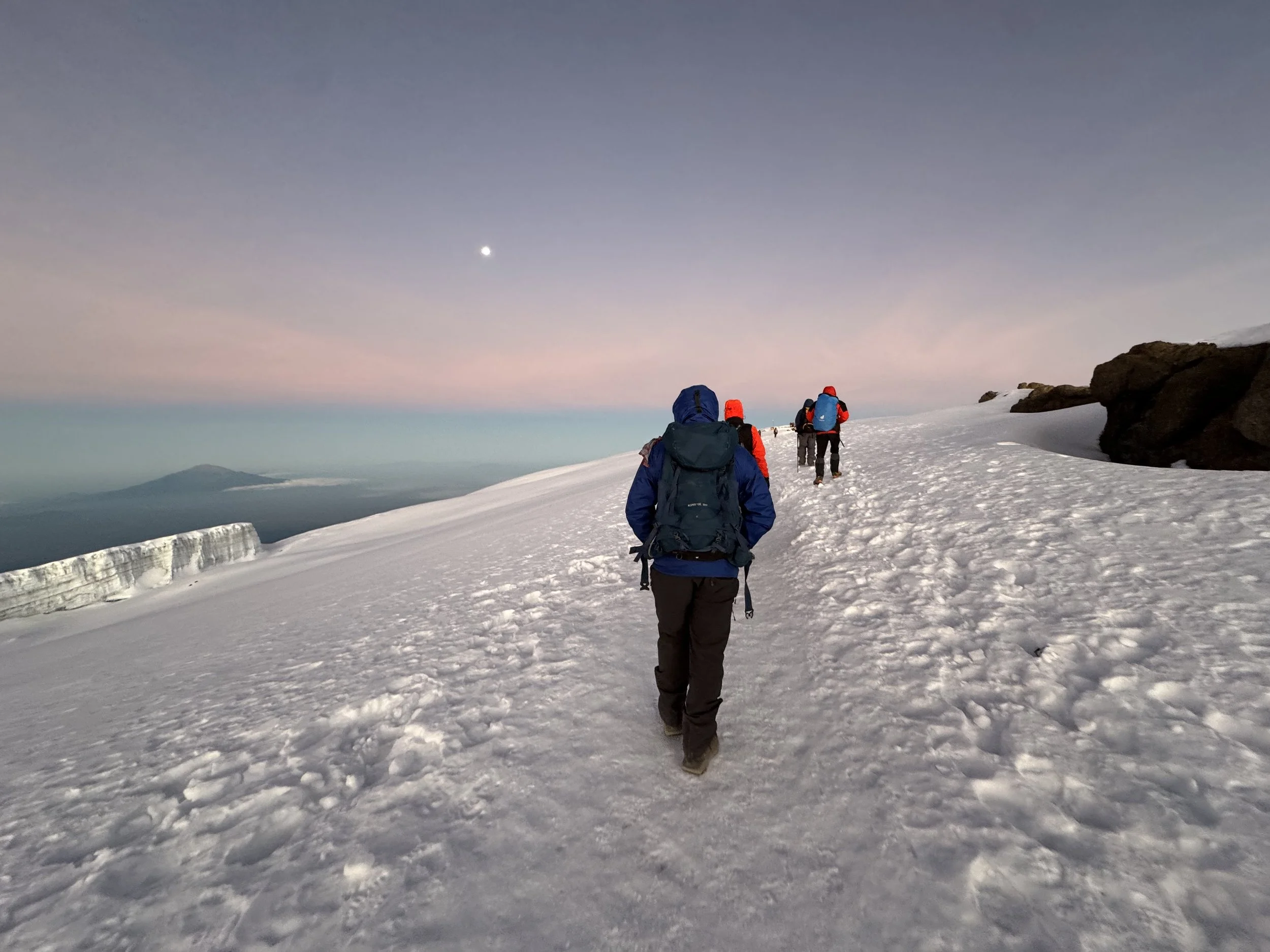
Be able to move over snowy and glaciated terrain with boots both uphill and downhill while carrying a full 30L pack.

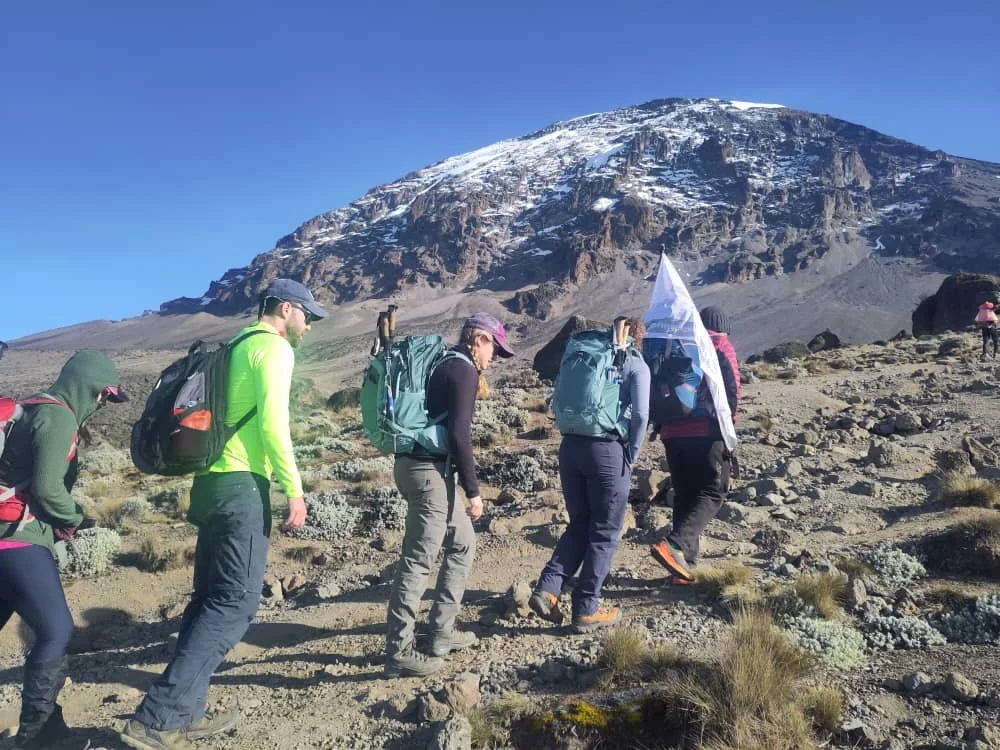
Be able to hike 4-6 hours per day at altitude (see ascend profile for details), except for summit day which will be at least 12 hours of hiking.

Have the cognitive ability to perceive, learn, understand and retain risk management and emergency procedure instructions from instructional staff, contractors, emergency personnel, and other group members.
Weather
Base of the mountain (Moshi): Average temperatures range from 70°F to 80°F (21°C to 27°C)
Summit (above 5,000m): Temperatures can range from 0°C to -20°C (32°F to -4°F) and at night can drop
to -20°C to -10°C (-4°F to 14°F)
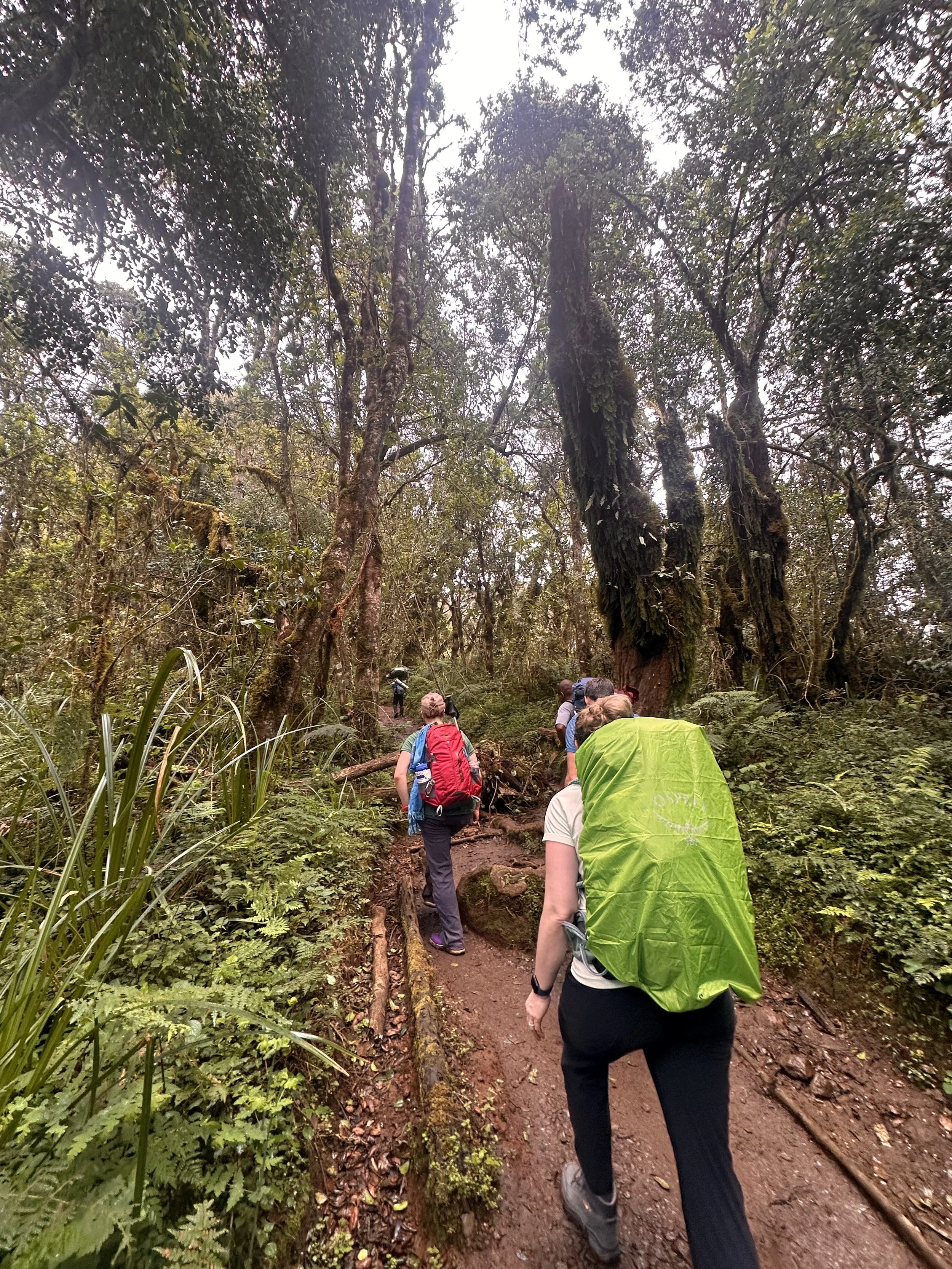
Machame route specifics: The Machame route is known for its diverse scenery, including rainforest, moorland, and alpine desert. Though January is the dry season, hikers may encounter rain (or snow at the higher altitudes).
Emergency Protocols
Helicopter evacuation is available at every camping site throughout the Machame route through designated areas. Each campsite has a stretcher with wheel available. Mountain guides coordinate evacuation through Kilimanjaro Search and Rescue (the national park's preferred service).
If there is a medical emergency:
Climbers will be required to have travel insurance that covers helicopter evacuation and medical expenses up to 6,000 meters.
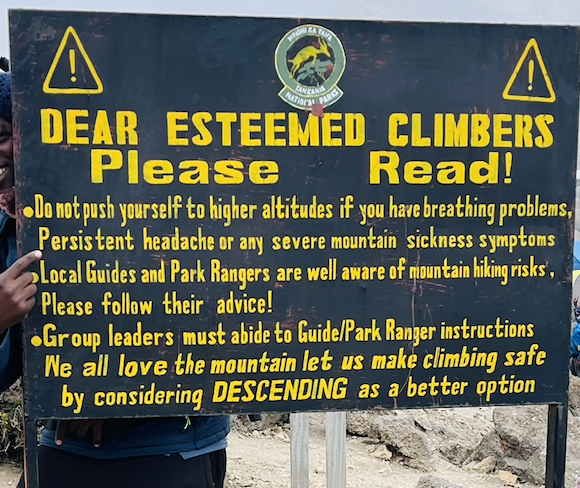
Guides carry a smaller tactical first aid kit for immediate use on the trail. Oxygen is available in case of emergency. Should any participant require oxygen at any time, they are no longer permitted to ascend.
If the climber is able to walk, they may be assisted in walking down to a lower altitude. A guide will be assigned with them (trips are planned so that there will be a 1:1 guide ratio per participant). Should they reattempt to re-ascend, guides will communicate and coordinate a meeting place at the next camp. The Machame route is well established.
If the climber requires stretcher evacuation, a distress call is made to Kilimanjaro SAR or a similar service.
A helicopter, often from a base in Moshi, is dispatched to the nearest designated landing zone (e.g., Barranco Camp, Karanga Camp, or Barafu Camp).
The patient is assessed, stabilized, and transported to a medical facility in Moshi or Arusha. Typically this would be done by Kilimanjaro Search and Rescue team.
Helicopter availability is subject to weather conditions, and a stretcher evacuation may be required as a backup.
If helicopter evacuation is not possible, a stretcher will be used to carry the injured climber down the mountain.
Trained porters are responsible for carrying the stretcher and ensuring the patient's safety.
Guides and support teams use mobile phones, satellite phones, and VHS radios for communication.